
Essay · Article
The Water Effect in Coffee
After all, it's more than 98% of what's in your cup.

FXVIIRGINIA | Espresso Sommelier
Feb 06, 2026
Water: Coffee’s Silent Collaborator.
We celebrate the farmer who coaxed sweetness from volcanic soil, the roaster who sculpted flavor with fire, and the barista who turned ritual into performance. Yet behind every great cup stands a silent collaborator—rarely credited, often ignored, but utterly decisive: water.
Brewed coffee is more than 98% water. That simple fact reframes everything. If water makes up nearly the entire beverage, then its character inevitably determines what we taste—just as surely as origin, roast, or brew method.
If our goal is to understand coffee fully, then we must stop treating water as a neutral backdrop and start recognizing it as an active participant in extraction and flavor.

Water as a Solvent
At the molecular level, water is a solvent. Its role is to dissolve desirable compounds from roasted coffee (e.g. organic acids, sugars, lipids, aromatics)—while leaving behind harsher, insoluble elements like cellulose and excessive lignins. But water does not extract indiscriminately. Its effectiveness depends on what’s dissolved in it already.
Pure H₂O is actually a poor extractor. Without minerals, water struggles to bind with flavor compounds, resulting in coffee that tastes thin, sharp, or hollow. On the other extreme, water overloaded with minerals extracts too aggressively, pulling excessive bitterness and flattening nuance.
Extraction, then, is not just about how much coffee dissolves—but which compounds dissolve, and in what balance.
The Role of Minerals
This is where minerals—such as calcium, magnesium and bicarbonates—matter.
Calcium & Magnesium
Calcium and magnesium ions increase extraction efficiency by bonding with flavor compounds—particularly acids and sugars.
- Magnesium tends to enhance brightness and clarity.
- Calcium contributes body and structure.
The ratio between them subtly shifts flavor perception, which is why different waters can make the same coffee taste radically different.
Bicarbonates
Bicarbonates act as buffers neutralizing acids and helping shape balance.
- Too little → sharp, sour cups
- Too much → muted acidity and dull flavors
This buffering effect explains why coffee brewed with very hard water can taste flat, even when extraction is technically “high.”
When water lacks sufficient mineral content, extraction is weak. The result is coffee that tastes underdeveloped or empty. When mineral levels are too high, extraction becomes aggressive, pulling out excessive bitterness and masking origin character.
In both cases, brewers often blame grind size, roast level, or technique—when the real variable is the water itself.
Why Professionals Obsess Over Water
Given these premises, it’s no surprise that professional baristas and coffee organizations got obsessed over water in the recent years. Indeed, they understand something fundamental: water determines not only how much is extracted, but what is extracted.
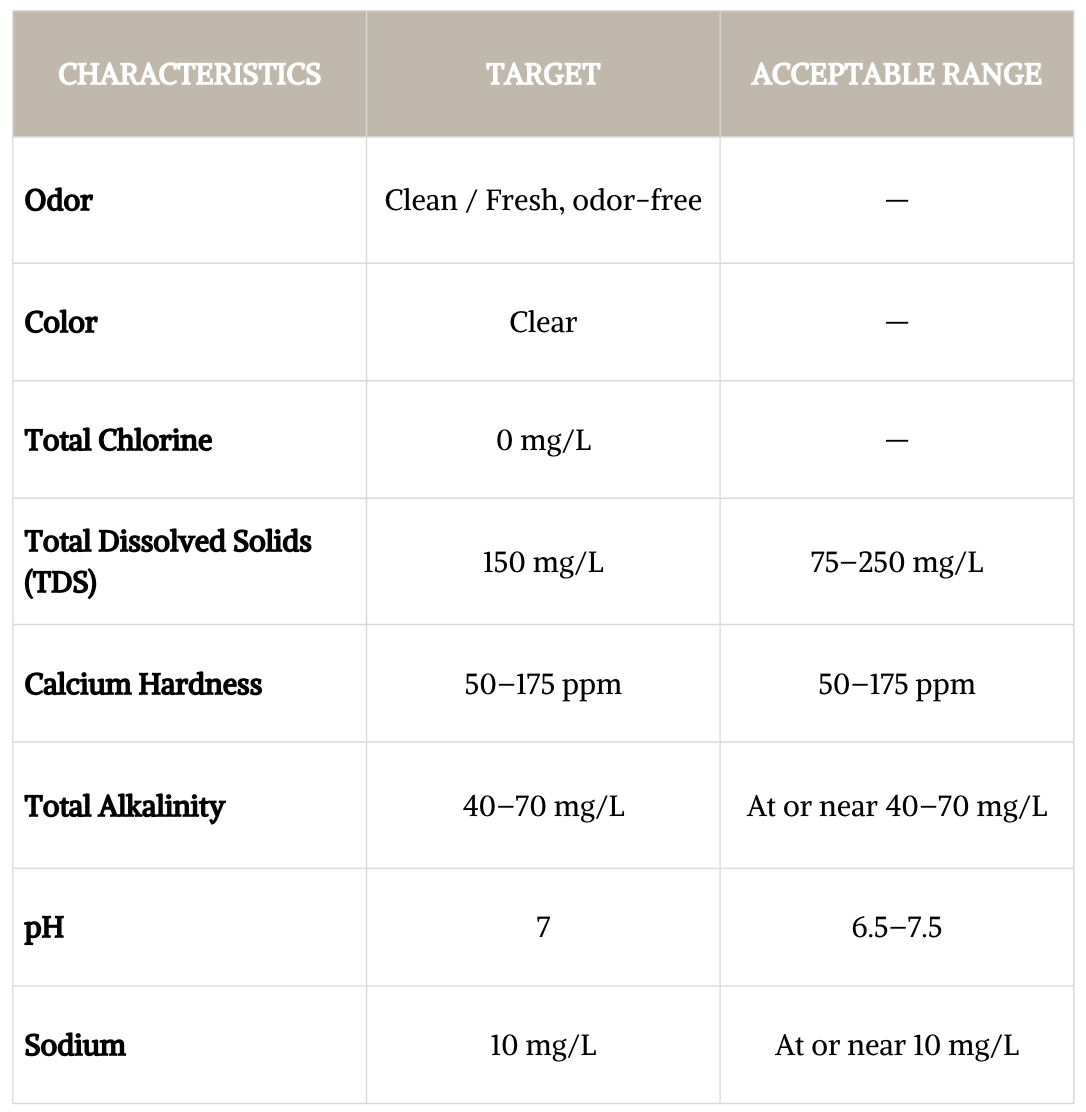
SCA Brewing Water Standards
In order to create common standards within the coffee industry, the Specialty Coffee Association (SCA) published detailed water standards. The SCA water standards aren’t rules but guardrails. They aim to balance flavor clarity, extraction efficiency, and equipment longevity. Importantly, these values are not absolutes. They represent a center of gravity—a zone where most coffees perform well.
Different origins and roast styles can benefit from water that leans slightly brighter or rounder. This is why cafés and competitors often tailor water to specific coffees.
Or read it elsewhere