
Essay · Article
The Coffee Lifecycle
From blossom to cup: how a coffee cherry becomes the morning ritual.

FXVIIRGINIA | Espresso Sommelier
Aug 05, 2026
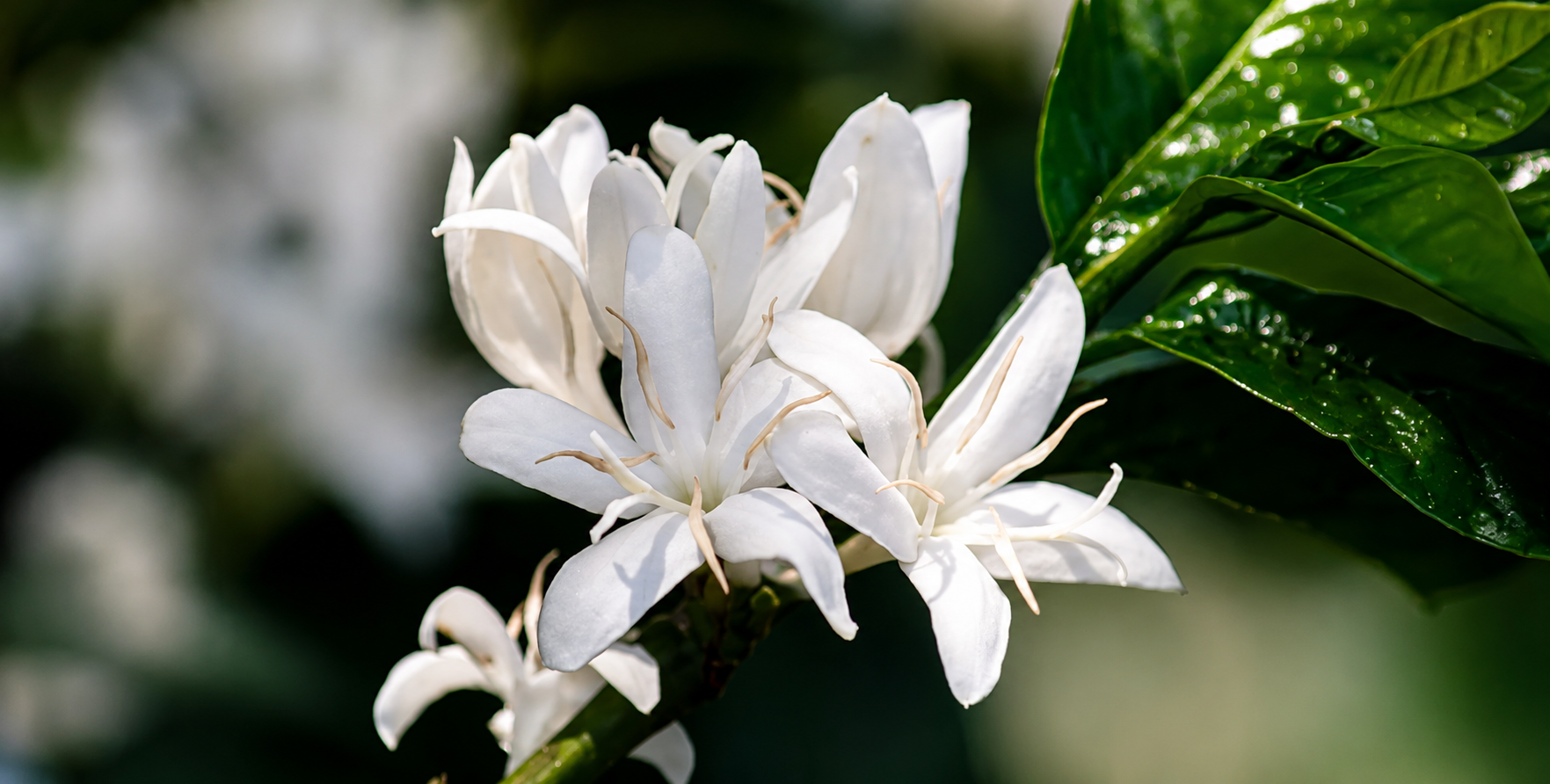
Every espresso begins its journey years before it reaches your cup.
Unlike many agricultural commodities, coffee comes from a perennial tree that can remain productive for more than 20 years. Each harvest begins with a delicate white blossom that, over the following months, develops into a coffee cherry containing the seeds that will eventually be roasted, traded and brewed around the world.
Flowering
The cycle begins with one of the most spectacular sights in agriculture. After a prolonged dry period, the first significant rainfall triggers flowering. Within just a few days, entire coffee plantations become covered with fragrant white blossoms, often compared to jasmine.
Each flower has the potential to become a single coffee cherry.
The flowering period is extraordinarily important. If rainfall arrives too early, too late, or is unevenly distributed, flowering can become irregular, leading to cherries ripening at different times and ultimately reducing both yield and quality.
In Brazil, where flowering typically occurs between September and October, weather forecasts during these weeks are followed almost as closely by commodity traders as by farmers.
The Green Cherry
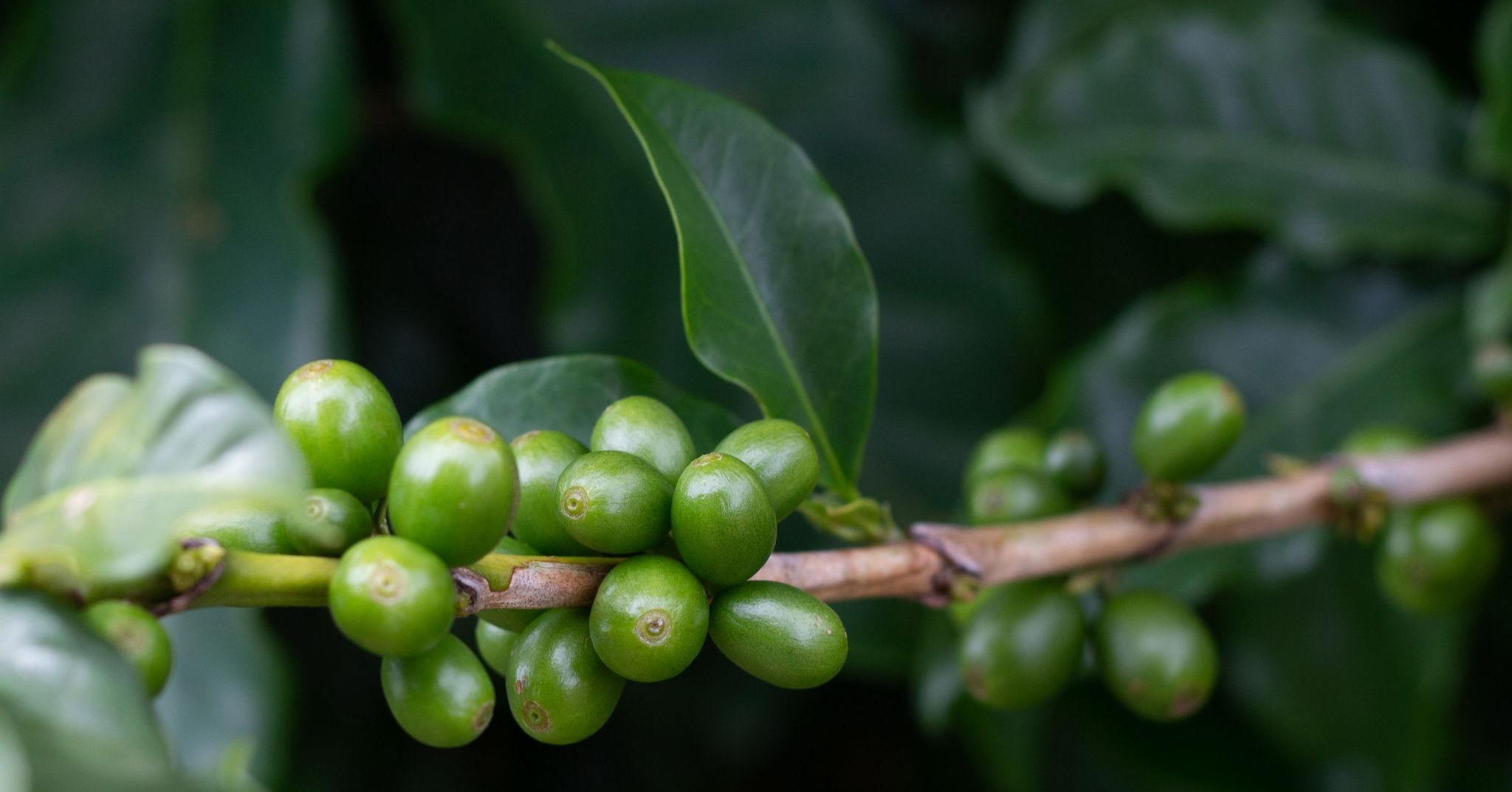
Once pollination is complete, the flower falls away and a tiny green cherry begins to form.
At this stage, almost all of the tree’s energy is devoted to growth. Over the next seven to nine months, the fruit expands while the seed inside (what will eventually become the coffee bean) develops its structure, density and chemical composition. At this stage of the cycle, the cherries contain very little sugar and are not yet suitable for harvest.
Ripening
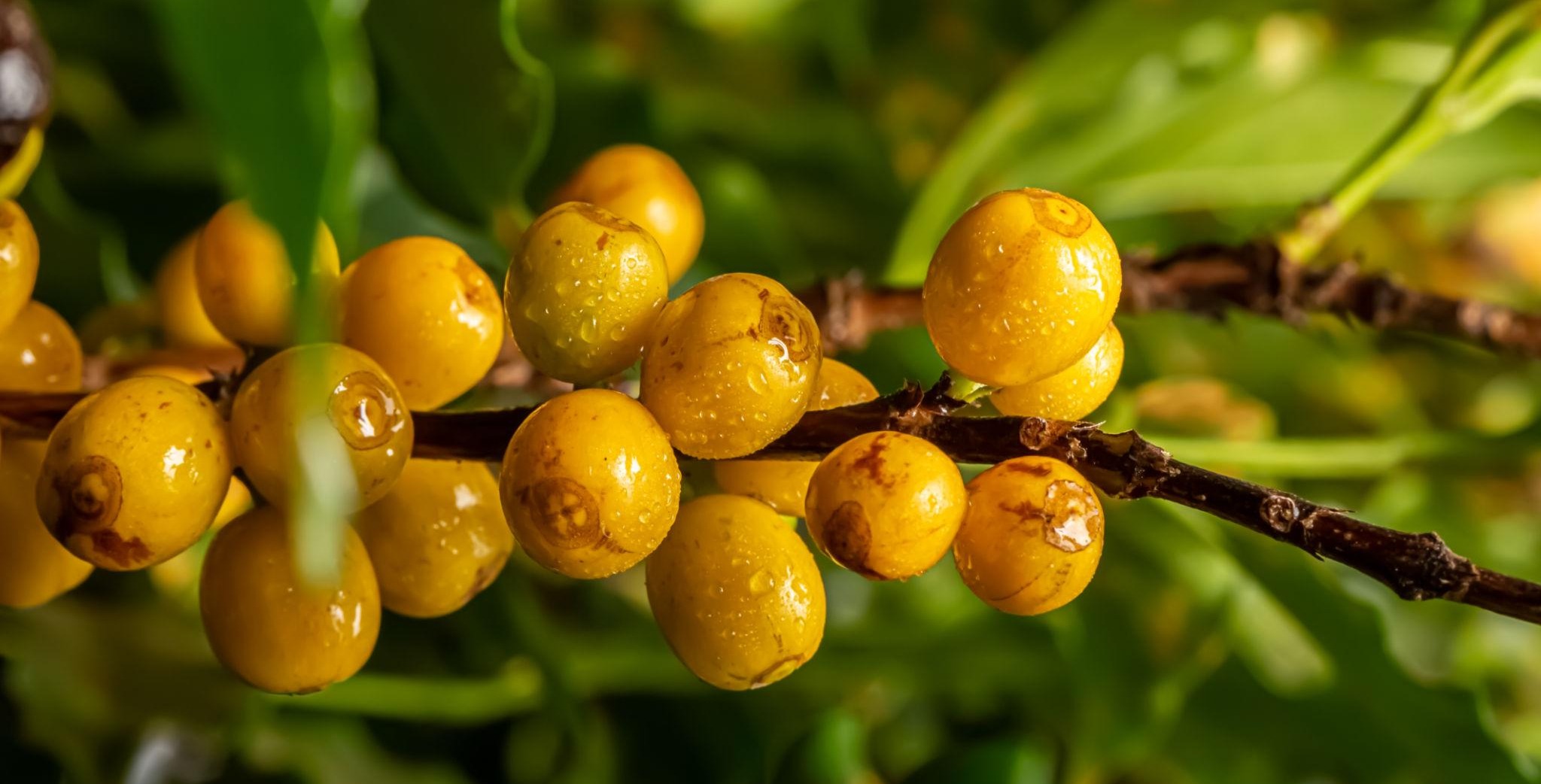
As the harvest approaches, the cherries gradually change colour. Depending on the variety, they transition from green to yellow, orange and finally deep red (or yellow in some cultivars).
During this period, sugars accumulate inside the fruit, organic acids evolve and aromatic precursors begin to develop. These compounds will later influence everything from sweetness and acidity to floral and fruity notes in the final cup.
Harvest
Harvest timing is one of the most important quality decisions in coffee production.
Because cherries do not all ripen at the same pace, harvesting is far more complex than it might appear. Countries such as Colombia often rely on selective hand-picking, while Brazil, the world’s largest producer, uses a combination of manual and highly mechanised harvesting due to its flatter terrain and larger farms. Picking cherries too early produces underdeveloped flavors and excessive bitterness. Waiting too long increases the risk of fermentation, mould or fruit falling to the ground.
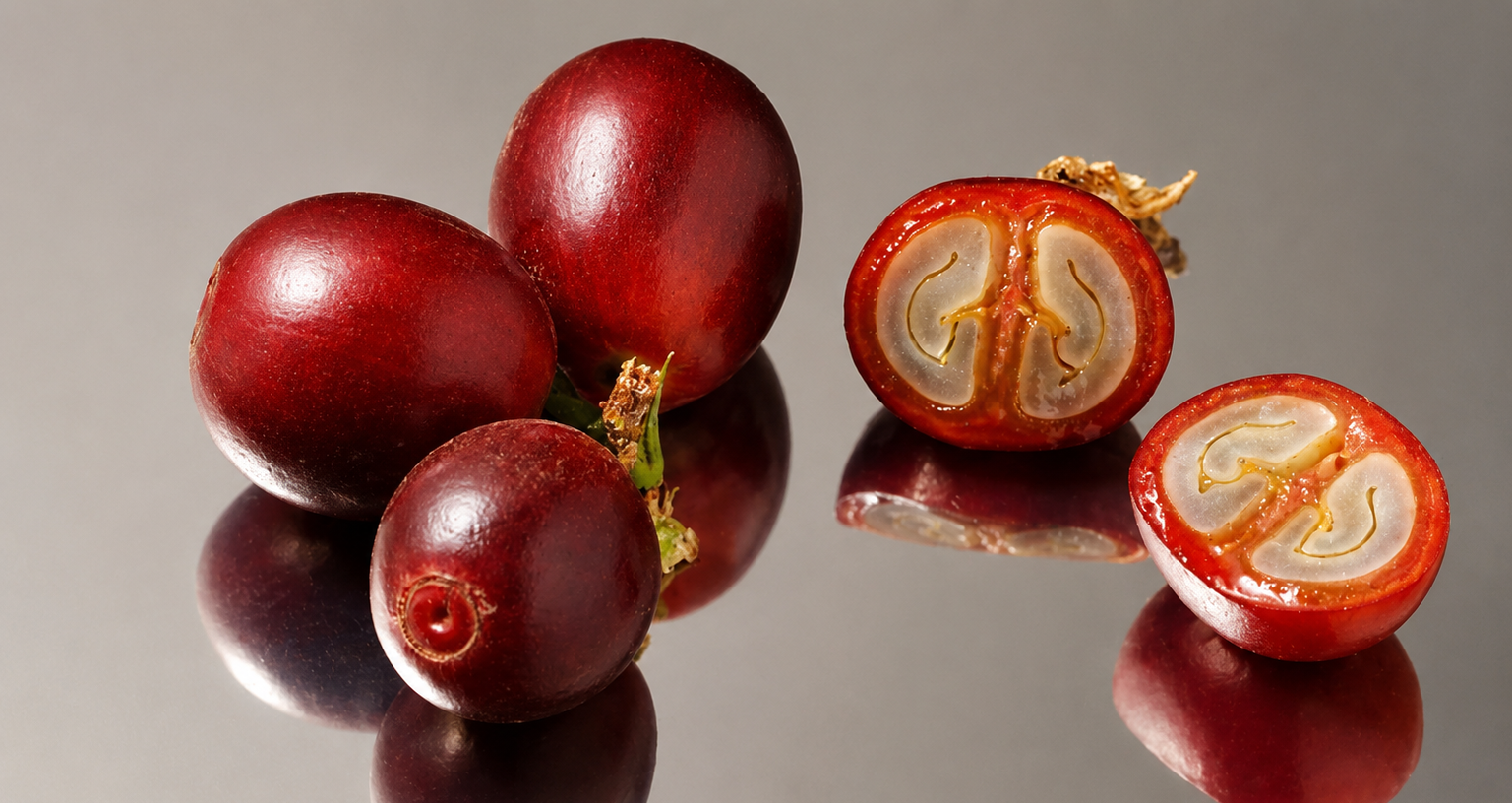
Once harvested, the journey continues with the removal of the fruit surrounding the seed. It is at this stage that many coffee drinkers discover a surprising fact: the "coffee bean" is not actually a bean.
Botanically, it is the seed of the coffee cherry. Most cherries contain two seeds positioned flat-side together. Occasionally, only one seed develops, producing a round seed known as a peaberry, which accounts for roughly 5–10% of production. Before processing, these seeds remain covered by parchment and a thin silvery membrane known as the silver skin.
Processing
Once harvested, the coffee cherries must be processed to separate the seeds from the surrounding fruit. This stage has a profound influence on the coffee’s final flavor profile.
The three most common processing methods are:
- Natural: the whole cherry is dried before the fruit is removed, often producing sweeter, fruit-forward coffees.
- Washed: the fruit is removed before drying, resulting in a cleaner and brighter cup.
- Honey: part of the sticky fruit pulp (mucilage) is left on the seed during drying, producing a balance between sweetness and clarity.
At this stage, the “coffee bean” is revealed. Despite its name, it is not actually a bean but the seed of the coffee cherry. Most cherries contain two seeds positioned flat-side together, while around 5–10% produce a single, round seed known as a peaberry.
Drying
Regardless of the processing method, the beans must be carefully dried to reduce their moisture content from around 50–60% to approximately 10–12%.
Drying may take place on patios, raised beds or in mechanical dryers, depending on climate and scale. If the beans dry too quickly or too slowly, defects can develop that ultimately affect cup quality and shelf life.
Once sufficiently dried, the beans are stored inside their protective parchment layer until milling.
Green Coffee
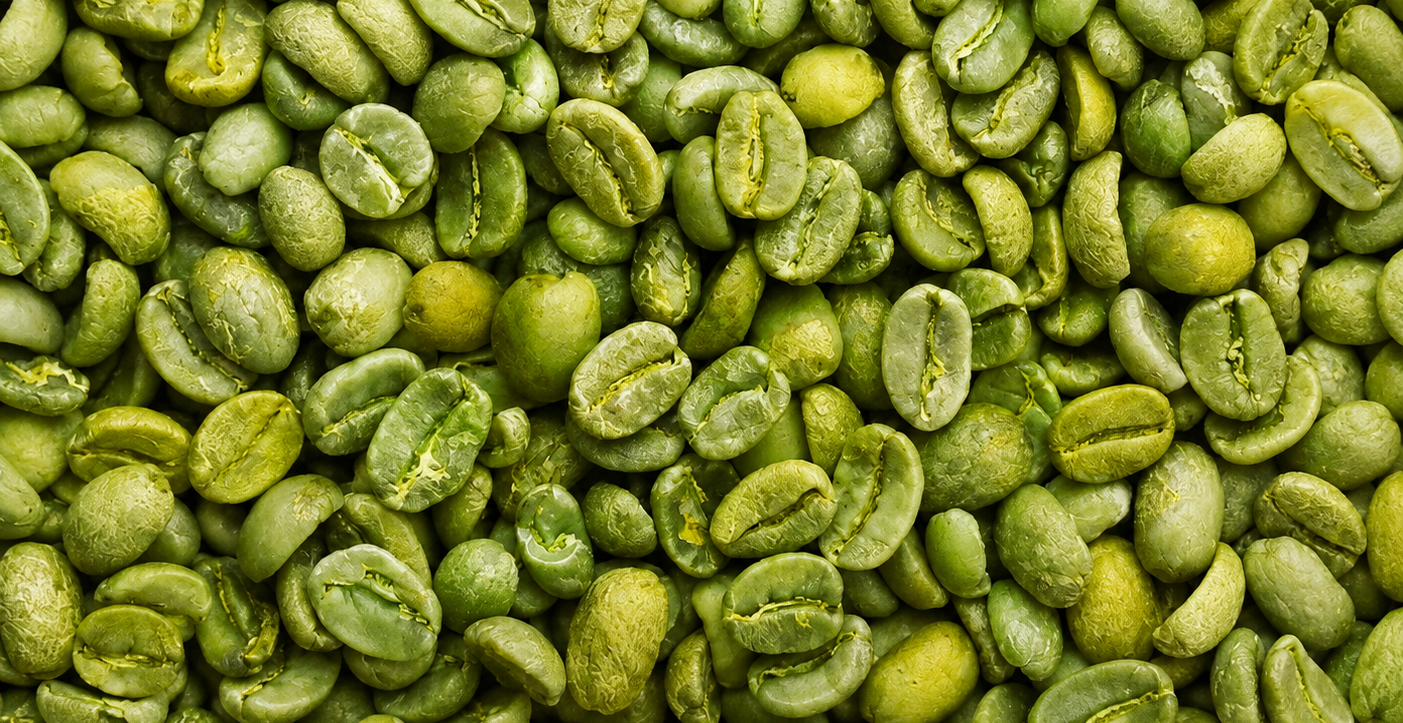
The final milling stage removes the parchment, revealing the familiar pale green coffee bean.
Green coffee is remarkably stable and can be stored for many months under suitable conditions, allowing it to be transported from producing countries to roasters around the world. This is the form in which coffee is traded internationally.
Roasting
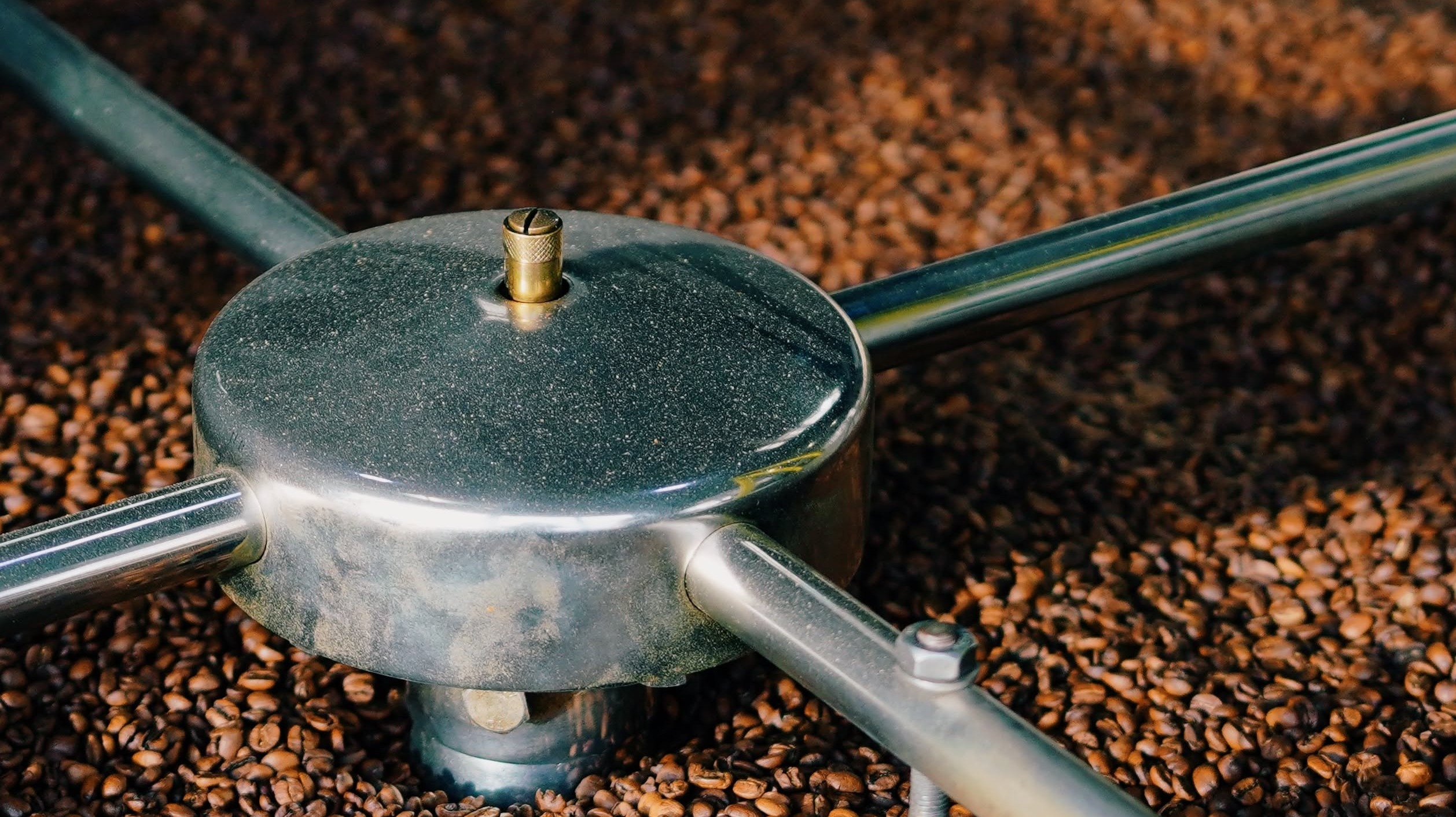
Roasting transforms chemistry into flavor. Temperatures exceeding 190–220°C trigger hundreds of chemical reactions, including the Maillard reaction and Caramelisation. The beans lose moisture, expand in size and change from green to the familiar brown colour.
Different roast profiles emphasise different characteristics. Lighter roasts preserve acidity and origin flavors, while darker roasts develop more caramelised, chocolate and smoky notes.
Grinding
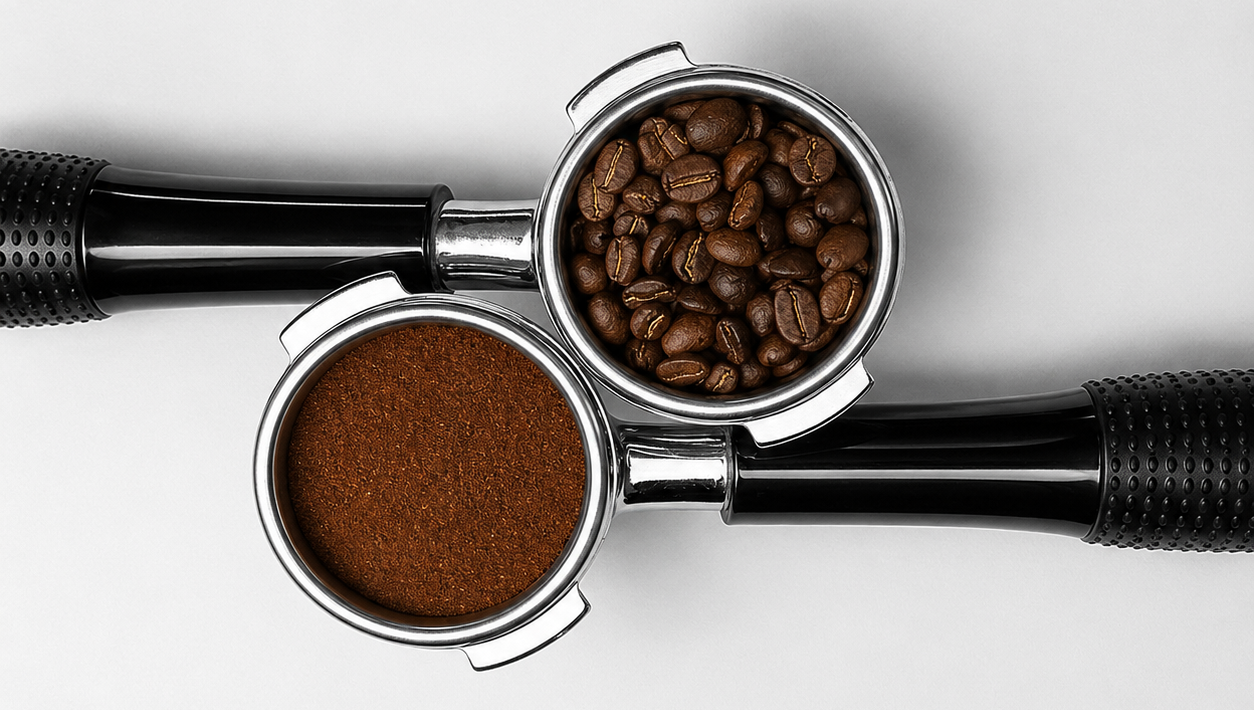
Grinding is the final step before brewing and it is considered as one of the most important determinants of extraction. By breaking the roasted beans into thousands of particles, it dramatically increases the surface area available for water to dissolve the coffee’s soluble compounds.
Grind size determines the rate of extraction. A finer grind exposes more surface area, allowing flavors to be extracted more quickly, while a coarser grind slows the process.
Fresh grinding also preserves flavor.
Once ground, coffee rapidly loses volatile aromatic compounds through oxidation, making grinding immediately before brewing one of the simplest ways to improve cup quality.
Brewing
Brewing is where months of biological growth, careful processing and precise roasting finally converge into a single cup. During extraction, hot water dissolves hundreds of soluble compounds from the roasted and ground coffee, releasing the flavors and aromas that define the final beverage.
Whether prepared as an espresso, pour-over, moka pot or French press, every brewing method seeks the same objective: to extract the desirable compounds while leaving the less pleasant ones behind.
By the time coffee reaches the cup, it has completed that remarkable journey: from a delicate white flower on a tropical tree to one of the world’s most traded agricultural commodities, before finally becoming the drink enjoyed by millions every day.
Or read it elsewhere