
Essay · Article
Espresso Sommelier vs Coffee Taster.
As specialty coffee matures, consumers increasingly want context rather than simply quality.

FXVIIRGINIA | Espresso Sommelier
Aug 07, 2026
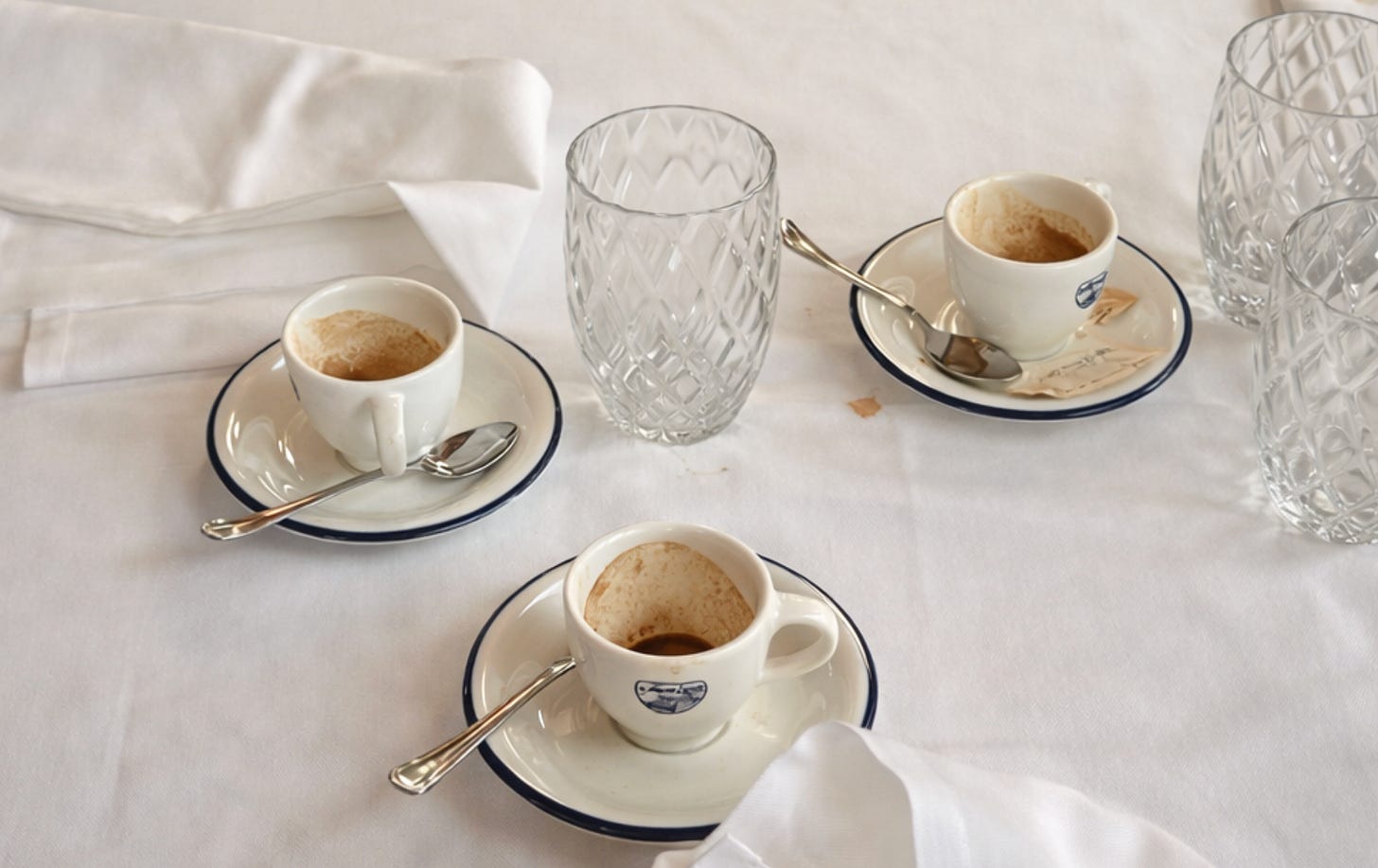
If you've ever fallen deep enough into the specialty coffee rabbit hole, you've probably come across both titles. Maybe on a café's staff page, maybe on a competition programme, maybe on someone's LinkedIn. And if you're honest, you probably assumed they were more or less the same thing. Or perhaps just different words for "person who is very serious about coffee."
But What’s the Difference?
Well, I agree on the fact that both professionals spend hours tasting coffee. Both train their sensory perception. Both can detect subtle differences in aroma, acidity, sweetness and body that most people would never notice. Yet their purpose is fundamentally different.
Two Professions, Two Objectives
Let’s start with a parallelism to the wine industry to make this difference easier to digest.
A wine judge evaluates whether a wine is technically well made according to established criteria. On the contrary, a sommelier goes one step further. Sommeliers explain the wine, its origin, how it was produced, why it tastes the way it does, and how to enjoy it.
Coffee follows a remarkably similar logic. While the two professions overlap in sensory analysis, they ultimately serve different purposes.
The Coffee Taster: measuring quality
A coffee taster is trained to evaluate coffee as objectively as possible.
This is particularly important in the green coffee trade, where buyers, producers, exporters and roasters need a common language to discuss quality. The goal is not to decide whether someone personally likes a coffee, but to determine whether the coffee meets defined quality standards using repeatable sensory protocols.
During a professional tasting, the coffee taster should assess characteristics such as:
- fragrance and aroma
- flavor
- aftertaste
- acidity
- sweetness
- body
- balance
- uniformity
- defects
The emphasis is on consistency. Personal preference should disappear from the equation as the task is to describe what is objectively present in the cup. In other words:
The Espresso Sommelier: understanding coffee as a system
An espresso sommelier certainly evaluates flavor.
But stopping at flavor would miss the bigger picture. Instead, the espresso sommelier connects every sensory perception back to the entire coffee value chain.
A bright citrus acidity?
Perhaps high altitude. Or a washed process. Maybe a lighter roast.
In this case, the cup becomes the final expression of hundreds of decisions made by farmers, processors, exporters, roasters and baristas.
Training programmes for espresso sommeliers therefore combine sensory analysis with coffee botany, geography, processing methods, roasting, water chemistry, extraction science and even consumer perception. Modern curricula explicitly include subjects such as espresso extraction, the influence of water, coffee origins, sensory vocabulary and how external factors influence tasting.
An espresso sommelier doesn’t simply say:
They are more likely to explain:
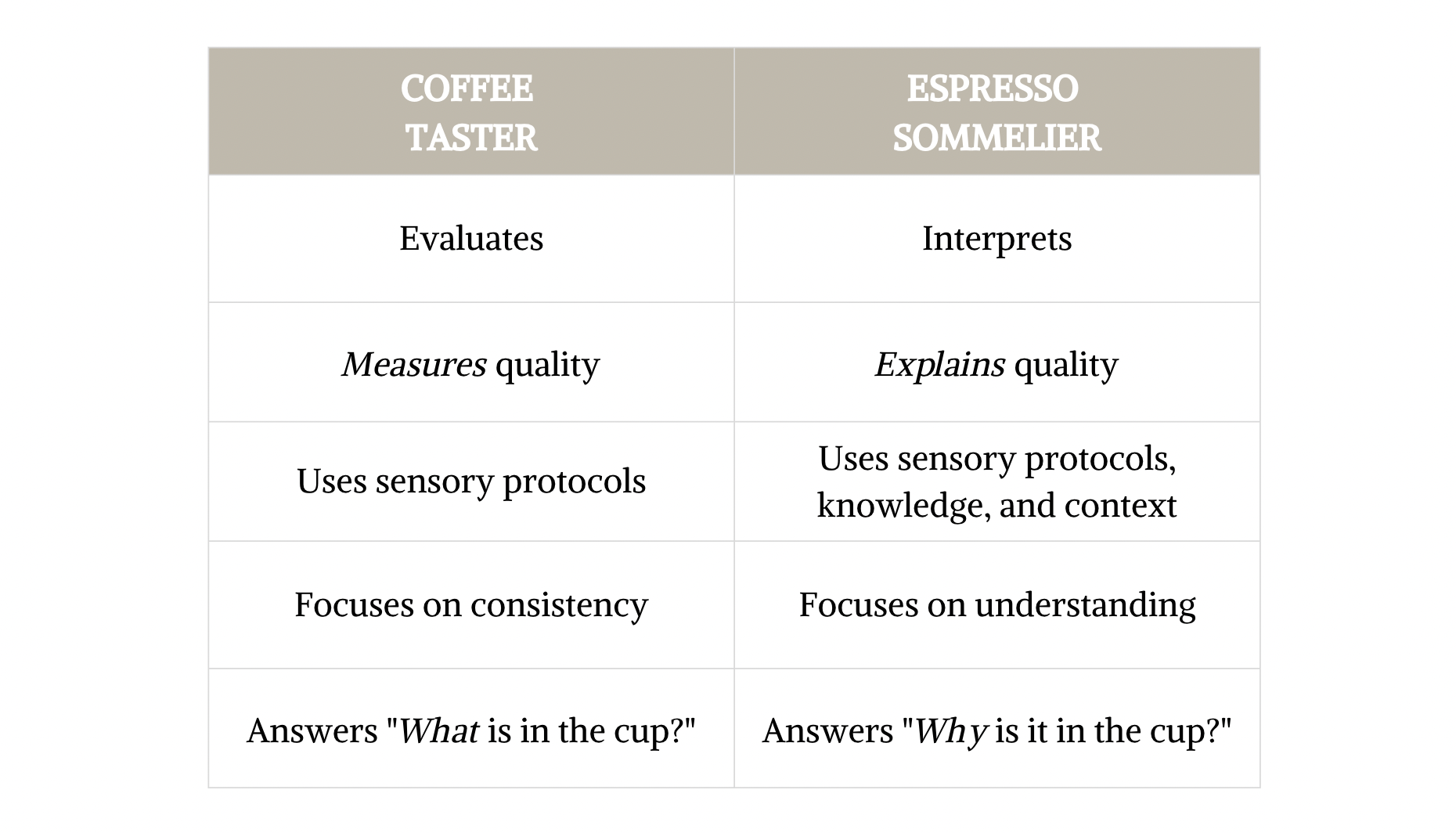
The difference is no longer evaluation. It is interpretation.
Table 1: Comparison between Espresso Sommelier vs Coffee Taste
The Espresso Sommelier in today’s coffee world
As specialty coffee matures, consumers increasingly want context rather than simply quality.
They want to know:
- where the coffee comes from;
- why processing matters;
- how roasting shapes flavor;
- why water chemistry changes extraction;
- why the same beans taste different as espresso and filter coffee.
In other words, they want someone who can connect the dots. That role increasingly belongs to the espresso sommelier, simply because they transform technical information into a story people can understand and, actually, enjoy.
Or read it elsewhere